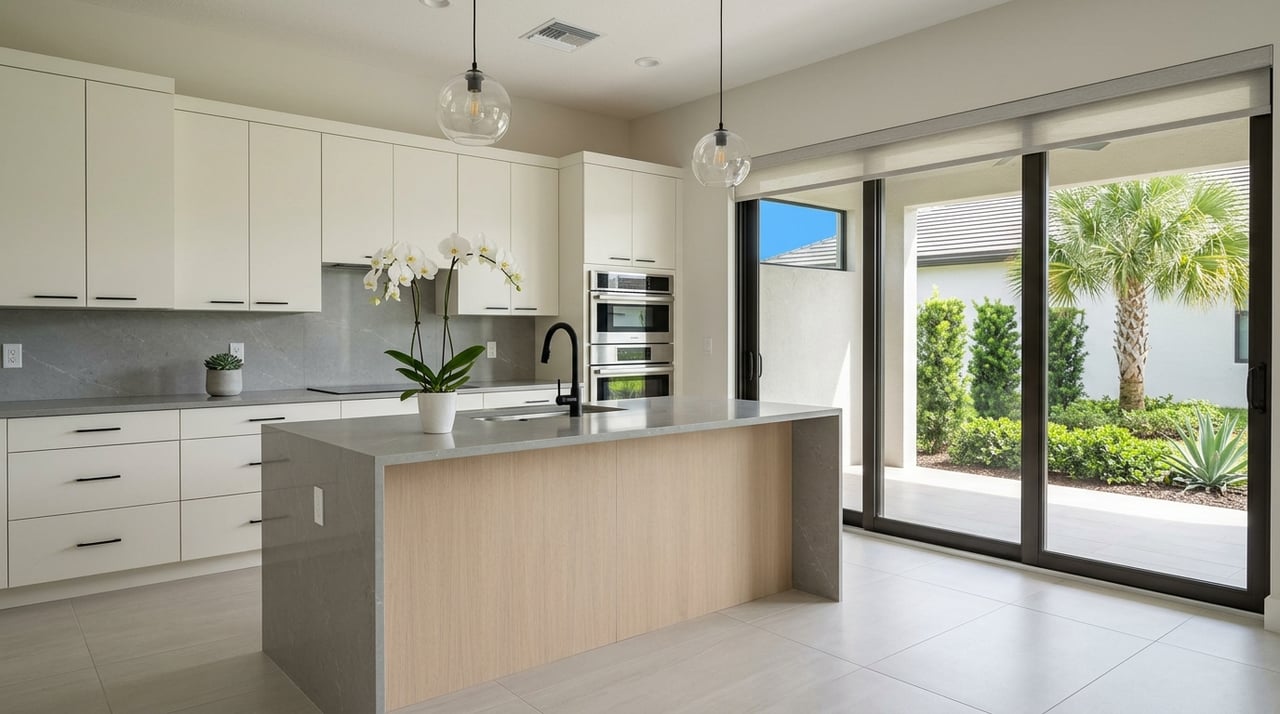
Tampa Suburbs Neighborhood Guide for Commuters & Remote Workers
June 25, 2026
June 25, 2026
If you work in Tampa but do not want your whole life to revolve around traffic, where you live matters more than almost anything else. Some buyers need a smooth drive to Downtown or Westshore a few days a week, while others want extra space for a home office and only head in occasionally. The good news is that Tampa offers several neighborhood patterns to choose from, and each one fits a different mix of commute, budget, and lifestyle goals. Let’s dive in.
Tampa is not built around just one work center. City planning materials identify three major business centers: Downtown and Channelside, the Westshore Business District, and the University of South Florida area.
That matters because your best neighborhood depends on where you actually need to go. A home that works well for a Westshore commuter may feel much less convenient if your office, clients, or appointments are closer to USF or northeast Tampa.
For a broad baseline, Tampa’s mean travel time to work is 24.8 minutes, while Hillsborough County’s is 28.7 minutes. Those numbers are helpful for comparing areas at a high level, but they are not a prediction of your exact door-to-door drive.
If you expect regular trips into Downtown, Westshore, or both, close-in neighborhoods usually make the most practical sense. These areas tend to reduce drive time and make office days feel more manageable.
Historic Hyde Park sits immediately west of Downtown’s business and cultural core, according to the City of Tampa. That close-in location makes it one of the clearest choices for buyers who want faster access to central Tampa.
The neighborhood also offers a distinct housing feel. The city describes it as a historic residential district, and Old Hyde Park Village adds retail and service uses nearby, which can make day-to-day errands and outings more convenient.
West Tampa is especially appealing if you want to split the difference between two major job centers. The City of Tampa notes that it sits between Downtown and the Westshore business district and has easy access to I-275.
For hybrid workers, that central position can be a real advantage. If your office schedule changes from week to week, a location between major employment hubs often gives you more flexibility.
Westshore Palms is one of the most commute-oriented neighborhood options in Tampa. It is bounded by I-275, Westshore Boulevard, Kennedy Boulevard, and Lois Avenue, placing it right in the west-side office and airport corridor.
If your work is tied to Westshore, frequent flights, or regular cross-town meetings, this location can be especially practical. It is less about escaping the city and more about staying connected to key business routes.
Beach Park gives you another South Tampa option if you want strong access without moving into the urban core itself. The City of Tampa describes it as having large lots, winding streets, and many original Mediterranean-style homes.
For buyers, that can mean a blend of character and convenience. You may be able to stay relatively close to Downtown and Westshore while still getting a more residential feel.
If your work revolves around USF or nearby medical and office destinations, your map changes. In that case, looking east or northeast can make more sense than focusing on South Tampa or Westshore.
Tampa Palms is one of the strongest options in this part of the market. The City of Tampa describes it as a mixed-use planned community with homes, shops, offices, apartment homes, schools, and dining across 5,400 acres.
The city also states that Tampa Palms is less than a five-mile easy commute to USF, Moffitt Cancer Center, Florida Hospital, and James A. Haley VA Center. If those destinations shape your routine, Tampa Palms deserves a close look.
West Meadows is another New Tampa neighborhood worth comparing. It is northeast of USF, and the city notes that the neighborhood has fiber optic cable throughout.
That detail stands out for remote workers who care about home-office readiness. It also fits buyers who want a suburban neighborhood setting while staying tied to northeast Tampa destinations.
Temple Terrace offers a different kind of balance. Its mean commute time is 26.0 minutes, and 95.1% of households report a broadband subscription.
Those numbers suggest a practical fit for people who want suburban-style living with strong remote-work potential. It can also serve as a useful alternative if you want to remain near major east Tampa destinations without choosing a larger planned-community setting.
Some buyers are not trying to be as close in as possible. Instead, they want a suburban environment with a commute that stays within a reasonable range.
Carrollwood is a strong middle-ground choice. Its mean travel time to work is 26.6 minutes, which is only modestly above Tampa’s citywide baseline.
It also has a median owner-occupied home value of $384,600, and 93.1% of households report a broadband subscription. For many buyers, that combination points to an established suburban market with decent connectivity and manageable access to Tampa job centers.
Westchase is one of the better-known suburban options on the west side. Its mean commute time is 27.8 minutes, its median owner-occupied home value is $559,500, and 95.6% of households report broadband subscription.
For buyers who want planned-community suburban living with good access to the west-side employment corridor, Westchase often fits the conversation. It is a useful choice when you want suburban structure without moving too far from Westshore-oriented routines.
If you work from home most of the time, your priorities may shift. You may care less about shaving a few minutes off a daily commute and more about space, connectivity, and overall value.
Lutz stands out for buyers who want a more spacious north-county suburban base. Its mean commute time is 31.8 minutes, which is higher than closer-in options, but 96.8% of households report a broadband subscription.
That makes Lutz worth considering if you only need to drive into Tampa a few days per week. The tradeoff is usually commute time versus more breathing room.
Brandon is another practical option for occasional commuters. Its mean commute time is 28.4 minutes, the median owner-occupied home value is $339,000, and 93.9% of households report broadband subscription.
Compared with some higher-priced suburban areas, Brandon may appeal to buyers who want suburban housing options and a workable commute profile. It often makes the most sense when office days are limited rather than daily.
Riverview is best viewed as a remote-first or occasional-commute suburb. Its mean commute time is 34.8 minutes, which is the longest among the suburban examples in this comparison, though 97.8% of households report broadband subscription.
In other words, Riverview can make sense if home life and remote work matter more than quick access to central Tampa. If you expect to drive in every day, other locations may be easier.
| Area | Mean commute time | Broadband subscription | Best fit |
|---|---|---|---|
| Tampa city baseline | 24.8 min | 93.6% | General benchmark |
| Carrollwood | 26.6 min | 93.1% | Suburban balance |
| Temple Terrace | 26.0 min | 95.1% | Near east Tampa destinations |
| Westchase | 27.8 min | 95.6% | West-side suburban commuting |
| Brandon | 28.4 min | 93.9% | Occasional commuter value |
| Lutz | 31.8 min | 96.8% | Remote or hybrid with more space |
| Riverview | 34.8 min | 97.8% | Remote-first households |
Across the Tampa area, broadband subscription rates are generally high. Tampa is at 93.6%, Carrollwood 93.1%, Brandon 93.9%, Westchase 95.6%, Temple Terrace 95.1%, Riverview 97.8%, and Lutz 96.8%.
That suggests remote work is broadly feasible in many parts of the region. Still, actual service, speed, and home-office setup can vary by address, so it helps to verify internet options before you write an offer.
Coworking supply is also more concentrated in Downtown, Westshore, Channelside, Ybor, and Midtown than in the farthest suburbs. For hybrid workers, that often makes close-in west and central Tampa neighborhoods more convenient for occasional meetings or flexible workdays.
The best Tampa neighborhood for you depends on three things: where you commute, how often you commute, and what kind of home setup supports your daily life. Once you know those priorities, your options become much easier to narrow down.
A simple way to frame it is this:
If you are comparing multiple parts of Tampa, it helps to look beyond a simple map search. A neighborhood may look farther out, but still fit your work style better if you only commute twice a week and want a larger home or more suburban setting.
If you want help sorting through Tampa neighborhoods based on your actual work routine, budget, and home preferences, Megan Pargov can help you compare options with a clear, low-stress plan.
Stay up to date on the latest real estate trends.
We are committed to guiding you every step of the way—whether you're buying a home, selling a property, or securing a mortgage. Whatever your needs, we've got you covered.
PARADISE HOME TEAM
3302 Alternate 19 Palm Harbor FL 34683