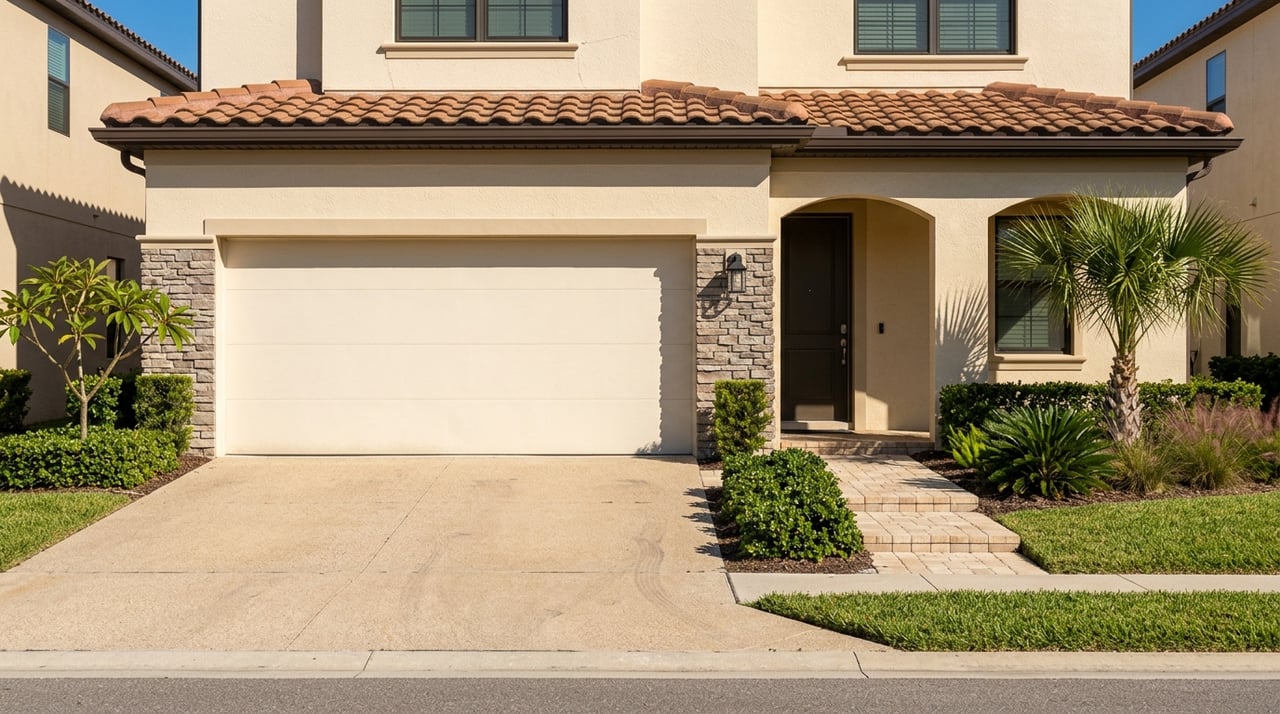
A First-Time Guide to St Petersburg Rental Property
May 28, 2026
May 28, 2026
Buying your first rental property in St. Petersburg can feel exciting and a little overwhelming at the same time. You want a property that rents well, holds up financially, and fits your long-term goals without surprises. The good news is that St. Petersburg offers several paths for first-time investors, from single-family homes to small multifamily properties and condos. If you know how to study the numbers and the location, you can make a much more confident decision. Let’s dive in.
St. Petersburg has the kind of rental depth that gives first-time investors options. In 2024, the city had an estimated population of 267,102, and about 37.2% of households were renter-occupied based on owner-occupancy data. In Pinellas County, that figure was about 30.5%, which shows strong rental demand across the broader area too.
The city also has a solid base of potential renters. Median household income in St. Petersburg was $75,192, and 42.6% of adults age 25 and older held a bachelor’s degree or higher. That points to a broad pool of renters, including professionals, students, health care workers, and households looking for flexibility.
Another plus is the variety of housing stock. A city housing analysis found that 58.6% of St. Petersburg’s housing stock was made up of single-unit structures, while 38.1% was multi-unit. For you, that means the market is not limited to one strategy. You can compare single-family homes, duplexes, fourplexes, condos, and townhomes based on your budget and comfort level.
A strong rental market starts with local demand drivers, and St. Petersburg has several. PCED describes the city as a major high-tech employment center with industries that include marine and life sciences, data analytics, financial services, and specialty manufacturing. Downtown alone has an estimated 39,700 workers, which supports demand for housing near job centers.
The city also has major institutions that attract a steady flow of renters. USF St. Petersburg is located downtown on the waterfront, and St. Petersburg College has multiple campuses, including downtown and Gibbs. St. Anthony’s Hospital and Raymond James headquarters add more employment anchors that can support demand from students, office workers, medical staff, and service workers.
Transit matters too. PSTA’s SunRunner connects downtown St. Petersburg with key destinations like the beaches, USF St. Pete, Tropicana Field, Grand Central and Edge districts, Bayfront, and Johns Hopkins All Children’s Hospital. According to PSTA, the corridor includes about 50,000 jobs and 40,000 residents within a half-mile of the route, which can make nearby properties worth a closer look.
Your first rental property should match your budget, risk tolerance, and management style. In St. Petersburg, most first-time investors will compare three main options.
Single-family homes are common in St. Petersburg because single-unit structures make up most of the housing stock. They can be easier to understand as a first investment because the ownership and maintenance structure is usually straightforward. They may also attract longer-term tenants who want more privacy or outdoor space.
The tradeoff is that you have one unit producing income. If it is vacant, your rental income drops to zero until you place a new tenant. You will want to build that risk into your numbers with a realistic vacancy allowance and reserves.
Small multifamily properties can be appealing because they spread risk across more than one unit. If one unit is vacant, the others may still generate income. That can make cash flow more stable, especially for a first-time investor who wants a little more cushion.
Because St. Petersburg has a substantial multi-unit share, small multifamily is part of the local opportunity set. Still, these properties need careful review. You should confirm zoning, permits, condition, and operating costs before you move forward.
Condos and townhomes can offer a lower-maintenance ownership experience, but they come with extra due diligence. Association rules, dues, reserves, rental caps, and approval procedures can all affect your bottom line. In some cases, what looks affordable at first can become less attractive once you factor in monthly HOA costs and restrictions.
For condos and co-ops, structural review matters too. Pinellas County notes that Florida requires milestone inspections for condos and co-ops that are three stories or taller once they reach 30 years of age, and then every 10 years after that. If you are considering this property type, that should be part of your review process from day one.
Citywide averages can help you understand the market, but they are not enough to buy a rental property. In St. Petersburg, neighborhood-level research can change the economics of a deal in a big way. That is why your analysis should start with the exact area and even the specific ZIP code.
A smart first step is to use the City of St. Petersburg’s public neighborhood and zoning tools. The city’s Neighborhood Relations map helps you confirm boundaries, while the zoning and Future Land Use GIS overlay can show zoning districts, future land use, high-frequency transit routes, coastal high hazard area layers, and historic district information. Those details can affect both tenant demand and the work you can do on the property.
As you compare areas, ask practical questions like these:
Safety and property condition planning matter too, but keep your review tied to objective sources. The city is divided into three police patrol districts: South St. Petersburg, North/Northeast St. Petersburg, and West St. Petersburg. The St. Petersburg Police Department also offers free residential security assessments, which can help you evaluate basics like lighting, access, and visibility.
One of the biggest mistakes first-time investors make is using a citywide rent average to underwrite a property. In St. Petersburg, that can lead to a bad estimate. The citywide median gross rent was $1,663, but that number is only a rough check.
A better starting point is public rent data for Pinellas County and then narrowing down to the ZIP code. HUD’s FY2026 Fair Market Rent data for Pinellas County lists these baseline figures:
But ZIP-level data shows why broad averages are not enough. In the Tampa-St. Petersburg-Clearwater metro small-area FMR table, St. Petersburg ZIP codes vary quite a bit:
Those differences are large enough to completely change cash flow. A property that looks strong using a city average may not perform the same way in a lower-rent ZIP. On the other hand, a property in a stronger-rent area may support a very different investment strategy.
You do not need a complicated spreadsheet to spot a possible rental deal, but you do need the right basics. Start with gross scheduled rent, subtract vacancy and operating expenses, and you get net operating income, or NOI. From there, cap rate equals NOI divided by purchase price.
If you are financing the property, cash-on-cash return can help too. That figure looks at annual pre-tax cash flow divided by your cash invested. It gives you a clearer picture of how hard your money is working.
When you estimate expenses, do not leave out the less exciting line items. For a first rental, your budget should include:
If a property is a condo, be especially careful with dues, reserves, and any pending building-related costs. Those items can have a major impact on your monthly numbers.
Good due diligence is one of the best ways to lower risk. In Pinellas County, the Property Appraiser’s Quick Search lets you search by address, owner, parcel ID, property use, and tax district. That helps you verify the property classification, review sales history, and confirm basic parcel details.
The county’s lien-search service can also help surface code-enforcement liens. That matters because unresolved issues can affect your closing timeline, your renovation plans, and your overall costs. It is much better to know about these problems before you negotiate than after you are under contract.
You should also review permit history. In St. Petersburg, the city’s ePlan Review system is a useful place to check permit status. If a property has had additions, major upgrades, or repairs, you want to know whether that work was properly documented.
In St. Petersburg, physical location can affect more than just rent. Flood exposure, storm readiness, and historic district rules can all shape your insurance costs, renovation plans, and maintenance expectations. A property that seems like a bargain may come with added complexity if you do not review these items early.
The city’s zoning and Future Land Use GIS tools can help you identify coastal high hazard areas and historic district information. The city’s Office of Emergency Management also recommends that residents know their evacuation zone. For a first-time investor, these checks are part of understanding the true cost and risk of ownership.
A first rental purchase goes more smoothly when you have the right people lined up before you write an offer. A cautious investor should have a local real estate agent, lender, inspector, insurance broker, property manager, and tax or estate professional ready to support the process. Each one helps you catch a different kind of risk.
In St. Petersburg, local knowledge really matters. Your team should know how to pull parcel data, verify permits, review liens, and flag condo or association issues before they become expensive surprises. That kind of systems-driven approach can make your first investment feel much more manageable.
Your first rental property does not need to be perfect, but it does need to make sense on paper and in context. In St. Petersburg, the best opportunities often come from matching the property type to the neighborhood, the rent potential, and the level of due diligence required. Citywide averages are a starting point, but neighborhood-level underwriting and public-record research are what protect you.
If you want a first rental that feels more predictable, focus on the fundamentals. Study the ZIP-level rent range, account for all expenses, confirm zoning and permit history, and understand how transit, job centers, flood exposure, and condo rules may affect the property. That kind of careful planning can help you buy with more confidence and fewer surprises.
If you are thinking about buying your first rental property in St. Petersburg, working with a local team can make the process far less stressful. Megan Pargov offers clear guidance, local market knowledge, and a low-friction process to help you evaluate opportunities with confidence.
Stay up to date on the latest real estate trends.

We are committed to guiding you every step of the way—whether you're buying a home, selling a property, or securing a mortgage. Whatever your needs, we've got you covered.

PARADISE HOME TEAM
3302 Alternate 19 Palm Harbor FL 34683